
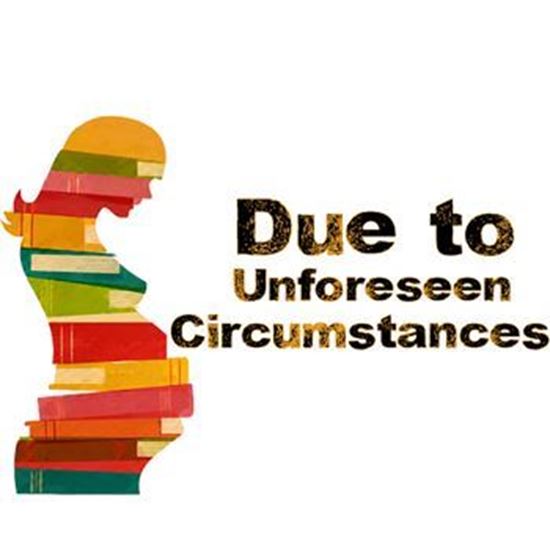
Due to Unforeseen Circumstances
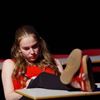
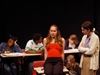
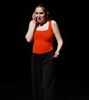
This poignant teen drama, inspired by true events, explores loss, unlikely friendships, and the journey to parenthood. Set in an alternative education center facing closure due to budget cuts, the play follows Maddy Joyce, a dedicated teacher who has built her career around helping at-risk teenagers. Maddy is privately navigating an unexpected pregnancy after experiencing multiple miscarriages. Her life becomes intertwined with Jubilee, a brilliant but guarded pregnant teenager who arrives at the center carrying her own grief, fears, and uncertainty about the future. As the students race to earn enough credits to graduate before the center closes, Maddy and Jubilee form an unlikely friendship that challenges both women to rethink what family, responsibility, and hope really mean. Along the way, the students discover their own strengths, support one another through personal struggles, and learn that sometimes the people who change our lives are the ones we least expect. Funny, moving, and deeply human, the play is a celebration of resilience, found family, and the life-changing impact of someone who simply refuses to give up on another person.
Running approximately 50–60 minutes.
Productions
Behind The Scenes
With Playwright Jared Mallard
What inspired you to write this play?
Due to Unforeseen Circumstances is the most personal piece I’ve ever written. It comes from my wife’s and my experience of trying to have children.
Infertility and pregnancy loss are still things people often struggle to talk about openly. When we were going through it, there were very few places we felt we could turn for support. It took the better part of a decade before we had our first child, and later our second. We were incredibly fortunate, but that experience never really left me.
I remember leaving another disappointing appointment with my wife and seeing a pregnant teenager nearby. At the time, it hit me hard. Here we were, older, settled, desperately wanting a child, and struggling to make it happen. Meanwhile, here was someone much younger dealing with a pregnancy that may not have been planned at all. In that moment, it felt almost like the universe was mocking us.
That stayed with me.
Eventually, I started thinking less about the unfairness of that moment and more about how different people can be carrying completely different kinds of pain at the same time. One person may be desperate to become a parent. Another may be terrified because parenthood has arrived before they were ready. Neither experience cancels out the other.
That idea became the emotional starting point for the play.
I wanted to write about infertility, pregnancy loss, and unexpected pregnancy without turning any of them into something shameful. We still carry too much silence around these experiences, and I think that silence can make people feel far more alone than they need to be.
What's your favorite part or line in the play? Why?
There are two parts I really love.
The first is the ending. It was partly inspired by Waitress, one of my favorite musicals. There’s a moment when Jenna finally holds her baby and, for a brief second, everything else seems to disappear. All the fear, disappointment and uncertainty that came before it suddenly feels very far away.
I wanted to pay homage to that feeling in my own way. Not copy the moment but capture that same sense of emotional release. After everything Jubilee has carried, including not knowing if she wanted the baby and all the uncertainty surrounding what her life might look like, the ending gives her a moment where all of that noise finally stops.
Suddenly, it’s real.
She is holding her child, and the love staring back at her pushes everything else aside. The fear is still part of her story, but in that moment, it no longer controls it.
I think only a parent truly understands that feeling. The first time you hold your child is almost impossible to describe. There is a rush of love and emotion that nothing else can replicate. No drug, no achievement, no other experience really compares to it.
That was the feeling I wanted Jubilee to have at the end. After spending so much of the play wondering what this pregnancy means for her life, she finally gets an answer that isn’t intellectual or practical. She feels it.
The other part I love is “Happy Pukes.” It’s probably one of the funniest moments in the play, but I also like it because it says a lot about the characters. The play deals with some heavy material, so I wanted moments where the humor comes from how people actually cope. Sometimes people say ridiculous things at exactly the wrong time because that is how they survive difficult situations.
“Happy Pukes” has always felt very human to me. It breaks the tension, gives the audience permission to laugh, and reminds us that even in the middle of something painful, life can still be absurd.
Where did the characters come from? Or tell us more about them.
As I mentioned above, Maddy Joyce and her husband are deeply rooted in my wife’s and my own experiences.
There are obvious differences, of course. I cannot bake, for one. And there are parts of our story that are simply too private to put onstage, even in a play this personal. But emotionally, those characters come from a place of lived experience.
A lot of what Maddy carries, the hope, frustration, grief, waiting and trying to keep functioning while something so personal is happening in the background, comes from things my wife and I went through together. I wanted that part of the play to feel truthful rather than dramatic for the sake of drama.
Jubilee came from a different place. She grew out of that moment I described earlier, seeing a pregnant teenager while my wife and I were struggling to have a child. At first, that image stayed with me because of how unfair it felt. But over time, I became more interested in imagining the other side of that experience.
What was she feeling? Was she scared? Did she feel judged? Did she know what she wanted? Was everyone around her making assumptions about her before she had even figured things out for herself?
That became Jubilee.
So while Maddy is rooted much more directly in lived experience, Jubilee came from trying to understand a completely different experience with empathy. Their relationship became the heart of the play because they are dealing with pregnancy from opposite directions, but both are carrying uncertainty, fear and hope.
What did you try to achieve with this play?
More than anything, I wanted the play to make people talk about things we still tend to keep quiet.
Infertility and pregnancy loss can be incredibly isolating. So can an unexpected pregnancy. They are very different experiences, but both can come with fear, judgment and a sense that you are supposed to know how to feel about something that is actually very complicated.
I wanted to put those experiences beside each other without suggesting that one is harder or more deserving of sympathy than the other.
Maddy wants a child desperately and cannot have one easily. Jubilee becomes pregnant when she is not sure she wants to be a mother at all. On paper, they seem like opposites. But emotionally, they have more in common than either of them first realizes.
I also always begin a play by asking myself one question: What do I want a live audience to feel while watching this? For me, that is one of the most important parts of writing for theatre.
I think that idea can get lost sometimes. Theatre is live. The emotions are live. The audience is sitting in the same room as the actors, experiencing the story with them in real time. You can feel when a room changes. You can hear when people stop moving. You can hear the laugh that breaks tension, or the silence after a line lands harder than expected. That relationship between the stage and the audience is something no other form can quite replicate.
Because of that, I never want to write something that simply asks an audience to observe. I want them to participate emotionally. I want them to feel like they have been through something with these characters by the time the lights come up.
With this piece, I wanted the audience to run an emotional gauntlet. I wanted them to laugh, feel uncomfortable, feel hope, feel grief and eventually reach the ending carrying some of the same emotional weight as the characters.
That became one of the most rewarding parts of seeing the play performed. At the end of every show, there seemed to be tears everywhere in the audience. Happy tears. Tears of regret. Tears of sadness. People were reacting from very different places in their own lives, and you could feel that throughout the room.
As a playwright, there are few things better than witnessing that. You spend so much time alone with these characters, imagining how a moment might feel. Then one night you sit at the back of a theatre and realize an entire room is feeling it with you.
If the play achieves anything, I hope it gives people permission to talk more openly about these experiences, but I also hope they leave the theatre having genuinely felt something. For me, that is what live theatre does best.
Do you have anything else you'd like to add?
Just that schools should really give this show a chance.
Put it on. Be brave in your choice and don’t look back.
If your actors want something they can really sink their teeth into, something that isn’t cookie-cutter acting, this show gives them that opportunity. The roles are actor’s-dream material for theatre. They are raw, emotionally demanding and full of moments that let performers show what they can actually do onstage.
This play is not meant to be easy. It is meant to say something.
It asks a lot from the actors, and it asks something from the audience too. If you want a show that gets a real reaction, this is it. I’ve watched audiences laugh, go silent and leave in tears. Those reactions are part of why I love live theatre so much.
I would love to see Due to Unforeseen Circumstances performed all over the world, the way some of my other pieces have been, and hear how different audiences respond to it. That is one of the great things about theatre. The same script can live differently in every room.
If you are looking for a show that gives your actors something meaningful to work with and leaves the audience sitting there for a moment after the lights go down, this is for you.
I don’t want people walking out saying, “That was nice.”
I want them walking out feeling every emotion available to them.